




Durrell Endangered Species Management Graduate Certificate (DESMAN)
A rigorous 12week residential course, validated by the University of Kent, giving conservation professionals essential skills in species recovery, facilitation, management, and leadership.
Learn more
Endangered Species Recovery
A five‑day online course led by global experts introducing key endangered species recovery concepts and practical research skills for effective biodiversity conservation.
Learn more
Leadership Development for Conservation Practitioners
Two world class conservation organisations, one transformative course – join us for a nine-week journey to help you grow as a leader, unlock your strengths, and craft a leadership style that’s authentically yours.
Learn more
Professional Development Training for Conservation Practitioners – Mauritius
A training programme strengthening essential conservation skills, supporting professional growth, and equipping participants to address conservation challenges effectively, with full sponsorship available.
Learn more
Facilitation and Communication Skills
Five days to build your facilitation skills —navigate complex interests, inspire collaboration, and learn to lead meetings and workshops that make a real impact across conservation and beyond.
Learn more
Planning and Managing Conservation Projects – Conservation Standards
An interactive course teaching Conservation Standards and adaptive management through real case studies, providing practical tools for effective global conservation practice.
Learn more
GIS Skills for Conservation
A QGISbased course teaching ecological mapping and spatial analysis, building essential GIS skills for informed conservation planning and management decisions.
Learn moreDurrell Endangered Species Management Graduate Certificate (DESMAN)
Summary
Our flagship award winning course, validated by the University of Kent. This 12-week residential course is designed to equip conservation professionals with a complete range of skills to maximise their effectiveness at managing or participating in conservation projects. You will learn the latest theory and practice of endangered species recovery, and gain a wide variety of skills in facilitation, management, and leadership. As a validated course the DESMAN involves a considerable workload with multiple points of assessment.
Course content
This 12-week residential course is designed to equip conservation professionals with a complete range of skills to maximise their effectiveness at managing or participating in conservation projects. You will learn the latest theory and practice of endangered species recovery, and gain a wide variety of skills in facilitation, management, and leadership. As a validated course the DESMAN involves a considerable workload with multiple points of assessment.
During the course you will gain practical and theoretical knowledge in:
-
biodiversity and drivers of species decline
-
conservation planning and priority setting
-
the role of zoos and captive breeding
-
principles of animal husbandry
-
conservation medicine and wildlife disease
-
small population biology and genetics
-
in-situ conservation techniques
-
management and leadership skills
-
facilitation and team skills
-
GIS for conservation managers
-
captive and field research skills
-
education and community conservation
-
fundraising and financial management
-
population monitoring techniques
-
field sample collection
Residential (in-person) format
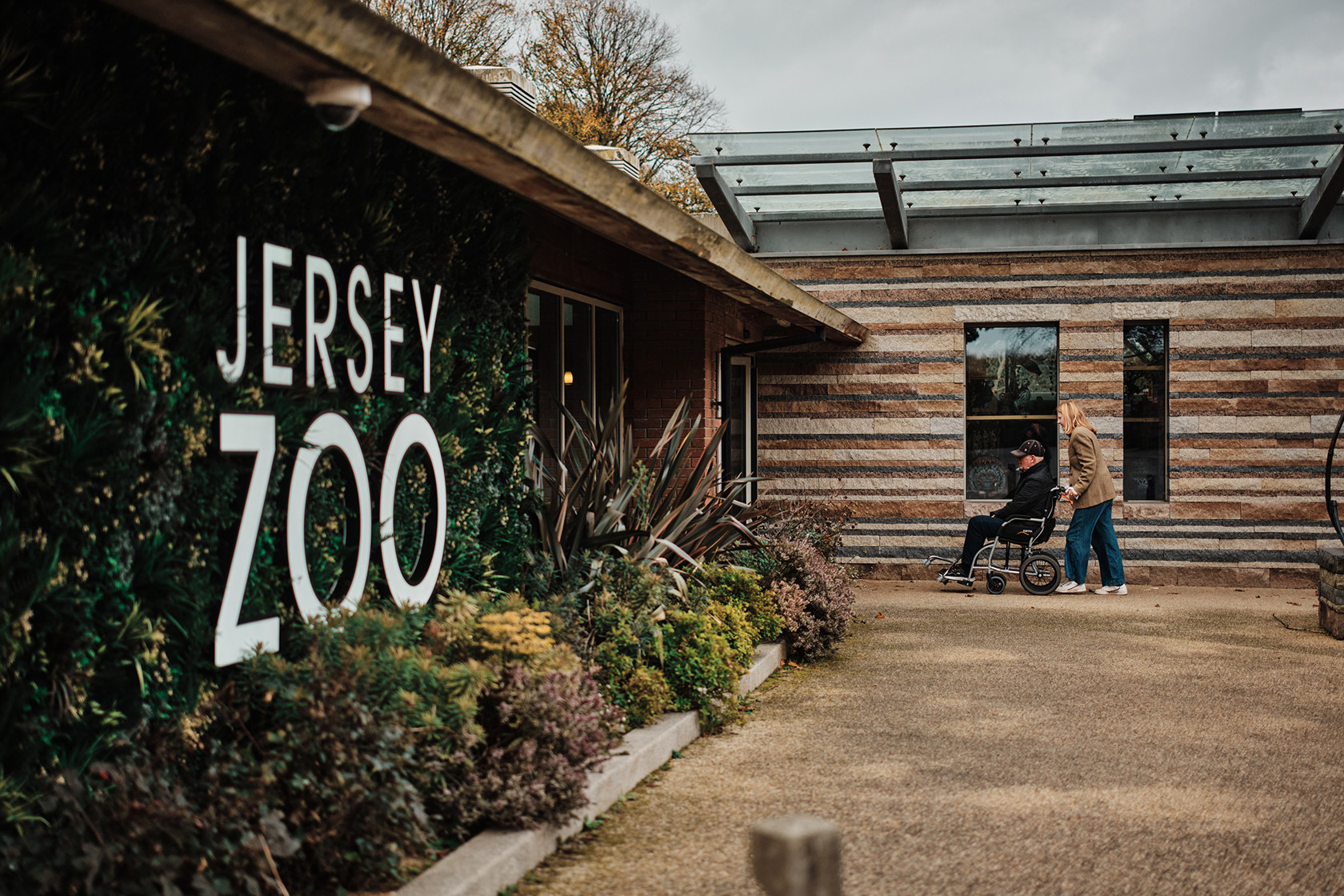
The course is based at the Durrell Conservation Academy, located at the headquarters of the Durrell Wildlife Conservation Trust in Jersey, Channel Islands. Our purpose-built learning facilities include a lecture theatre, a library housing over 11,000 volumes and 60+ journal subscriptions, and a computer lab, all set within the grounds of Jersey Zoo. With the zoo’s animal collection on site, participants gain valuable first-hand experience across our animal, veterinary, and education departments. Accommodation is provided in our on-site hostel, creating an accessible and immersive learning environment while still allowing time to explore the beautiful island of Jersey during downtime.
How to apply
For information regarding course fees and costs please read the course brochure. We have a limited number of partial scholarships available for this course. Further information about these is provided here, in the brochure below, and during the selection process. To apply please email academy@durrell.org to request an application form.
Still not sure? Read the course brochures for an in-depth look into the course syllabus, learning objectives, and the staff who will be teaching you. For further enquiries email academy@durrell.org.

"The course changed my life, not only professionally but also personally."
DESMAN course participant.
"I know the course will definitely have a positive impact on my professional career. I updated my LinkedIn profile, highlighting my skills in management & leadership in biodiversity conservation and I have already received a request to send my CV for a potential job."
DESMAN course participant.
Endangered Species Recovery
Summary
A unique, specially designed course, delivered by world-renowned experts and scientists in the field of Endangered Species Recovery (ESR). This five-day, online interactive learning experience introduces the issues and practical skills involved in saving threatened species from extinction. You will develop a critical understanding of biodiversity conservation, the issues it raises and how they may be addressed, as well as practical research skills to inform conservation action.
Course content
A unique, specially designed course, delivered by world-renowned experts and scientists in the field of Endangered Species Recovery (ESR). This five-day, online interactive learning experience introduces the issues and practical skills involved in saving threatened species from extinction. You will develop a critical understanding of biodiversity conservation, the issues it raises and how they may be addressed, as well as practical research skills to inform conservation action.
Durrell has an extensive history of leading the conservation of highly threatened species, through research and breeding programmes at our headquarters, and in our overseas field conservation programmes.
During the week you will gain knowledge and skills in:
-
The value and threats to biodiversity
-
Small population biology
-
Current approaches and recent progression in endangered species management
-
Planning species and ecosystem recovery programmes
-
The importance of blending captive species management and in-situ conservation
-
The multi-disciplinary requirements of successful Endangered Species Recovery (ESR) programmes, including action through education, community conservation, fundraising and policy.
Online format
The course runs full time, delivering over 30 hours of live content across a continuous five days with additional preparation required prior to the course. Therefore, participants need to be able to dedicate a full working week to meaningfully participate. Course materials include live, expert-led lectures, group discussions, activities, and individual work. Durrell case studies will help illustrate the teaching content and provide real life scenarios of global field programmes and captive breeding facilities at Jersey Zoo. Training staff at Durrell Conservation Academy will offer 1-2-1 support throughout. You will be given registered access to our online learning platform for pre-course material, additional resources including reading lists, discussion forums and advice for on-going training.
How to apply
The course fee is £450 with offers for Durrell alumni. Subject to interest, this course may run multiple times. Every run of a course will have a set start date. If you cannot attend, please enquire for other dates. To book a place please contact academy@durrell.org for an application form.
Still not sure? Read the course brochures for an in-depth look into the course syllabus, learning objectives, and the staff who will be teaching you. For further enquiries email academy@durrell.org.

"Fantastic week. Fantastic organisation."
ESR Course Participant
"Had an amazing week learning so much from skilled professionals working within Durrell conservation projects! Their lectures were invaluable for focusing on my future career and I would highly recommend to anyone interested in taking a course or internship with them!"
ESR Course Participant
Leadership Development for Conservation Practitioners
Summary
Run in collaboration with Fauna & Flora, you will learn how to develop your understanding of, and the practical skills required, to be a more effective conservation leader. This nine-week course will guide you to understand the principles of leadership and help you to explore your own personality, strengths, and potential strengths, so you may evolve an authentic leadership style that is uniquely yours.
Course content
Run in collaboration with Fauna & Flora, you will learn how to develop your understanding of, and the practical skills required, to be a more effective conservation leader. This nine-week course will guide you to understand the principles of leadership and help you to explore your own personality, strengths, and potential strengths, so you may evolve an authentic leadership style that is uniquely yours. Drawing upon the theory and practice of leadership, we will use case studies, conversations with experts, and your own experience, to see how this applies to the context of wildlife conservation projects. Our training will equip you with the tools to navigate challenges and develop the critical leadership skills required to influence and guide others, giving you the confidence to expand your capabilities and maximise your conservation impact.
During the course you will learn and reflect upon the following skills:
-
The value of self-awareness and reflection
-
Theory and principles of leadership practice
-
Situational leadership
-
Understanding and assessing organisational culture to inform leadership approaches
-
Effective leadership for team management
-
Learning from failure in conservation
-
Managing interpersonal relations
-
Negotiation skills, communicating and influencing
-
Utilising your leadership skills to develop your career
Online format
The online course includes 50 hours of self-paced learning spread over nine weeks. This will be split into 5hrs self learning/week, plus five 2hr expert-led live sessions. Live sessions will be offered at different times, to allow for different time zones (subject to demand).
You will be given registered access to our online learning management platform for the course syllabus. Here you will be able to track your academic progress and communicate with fellow students and course leaders using forums and discussion groups. Content will be delivered through a blend of formats, including reading, interactive quizzes, videos and guided research. The live and interactive sessions will run each week via zoom. These will involve discussions and activities designed to enhance your learning experience.
How to apply
The course fee is £450 with offers for early bird applications and Durrell alumni. Our next course will run Summer/Autumn 2026. To book a place please contact academy@durrell.org for an application form.
Still not sure? Read the course brochures for an in-depth look into the course syllabus, learning objectives, and the staff who will be teaching you. For further enquiries email academy@durrell.org.

"My increased confidence to be a leader, and the inspiration and motivation that I found, will help me to set up innovative and effective conservation action".
Course participant, 2022
Professional Development Training for Conservation Practitioners – Mauritius
Summary
This training programme is designed to strengthen and expand your skills and knowledge in key areas essential for effective conservation. Designed to support professional growth, the programme will equip you with the tools and expertise needed to address conservation challenges more effectively and increase your impact on the ground. Full sponsorship is available (subject to requirements).
Course content
This training programme is designed to strengthen and expand your skills and knowledge in key areas essential for effective conservation. Designed to support professional growth, the programme will equip you with the tools and expertise needed to address conservation challenges more effectively and increase your impact on the ground. Full sponsorship is available (subject to requirements).
Depending on funding availability, up to four courses may be delivered each year, either individually or consecutively. All courses offered are fully funded for participants from the SWIO region. The topics are as follows:
-
Survey techniques for assessing population abundance and monitoring.
-
Forest restoration and threatened plant species recovery including project design, planning and monitoring
-
Statistical analysis using programme R to inform and enhance conservation efforts
-
Facilitation and communication skills for effective team management and stakeholder engagement
For more information about Professional Development Programme courses offered this year please consult the course brochure.
Residential (in-person) format
This course is run at Durrell Conservation Training Headquarters in Mauritius. Teaching will be delivered by Durrell's own conservation specialists in Island Restoration, Conservation Science, Conservation Education and Outreach all with first hand experience in successfully restoring island ecosystems and building regional conservation capacity. Participants stay in shared accommodation for the duration of the course.
How to apply
Please note this course is designed for mid-career conservation practitioners from the Southwest Indian Ocean (SWIO) region, particularly those based Madagascar, Mauritius, Rodrigues, Seychelles, Comoros and Réunion. These islands are home to numerous endemic species and unique plant communities, and they face similar conservation challenges, making targeted and collaborative efforts essential. See brochure for full requirements.
Training is offered free of charge for Mauritian participants. Full scholarships are available for participants from Southwest Indian Ocean (SWIO) covering course fees, return international flights, shared accommodation, and inland transport. Please note: visa costs and travel insurance are NOT included.
For course dates for the current year, please consult the course brochure. To book a place please send you CV and covering letter to recruitmentmauritius@durrell.org
Still not sure? Read our course brochures for an in-depth look into the course syllabus, learning objectives, and the staff who will be teaching you. For enquiries please contact us on us on +230 6060992 or recruitmentmauritius@durrell.org.
Facilitation and Communication Skills
Summary
This five-day course is designed to develop the skills needed to facilitate meetings within your own organisation or workshops involving multiple stakeholders with multiple and potentially conflicting interests. This course is aimed at people working or planning to work in zoos or conservation organisations who wish to develop their facilitation skills. It is also relevant to other professionals or graduate level students who wish to develop their communication, facilitation and management skills.
Course content
This five-day course is designed to develop the skills needed to facilitate meetings within your own organisation or workshops involving multiple stakeholders with multiple and potentially conflicting interests. This course is aimed at people working or planning to work in zoos or conservation organisations who wish to develop their facilitation skills. It is also relevant to other professionals or graduate level students who wish to develop their communication, facilitation and management skills. The training you receive will give you the confidence to organise and conduct your own meetings and workshops tackling complex and contentious issues. You will develop links with experienced facilitators who will help you provide feedback to individuals to improve relationships; and help you to plan effective workshops and meetings.
During the course you will learn and practice essential workshop facilitation skills, including:
-
Decision making
-
Conflict management
-
Cross-cultural sensitivity
-
Group dynamics
-
Active listening
-
Consensus building
In-person format
The course will be based at the Durrell Conservation Academy at Durrell’s headquarters in Jersey. Teaching will be delivered by Durrell’s own conservation specialists. Course format involves lectures, case studies and significant amounts of time to practice the facilitation skills discussed within a small group setting. Participants will be learning alongside students from our flagship DESMAN course guaranteeing networking opportunities with a range of international conservation practitioners.
How to apply
The course fee is £575 with offers for Durrell alumni, the fee is inclusive of all course materials and unlimited entry to Jersey Zoo during the course. Dependent on availability, optional full board accommodation may be available in our on-site hostel for £70 per person per night. Optional lunches are available for non-residents at £10 per person per day.
To book a place please contact academy@durrell.org for an application form.
Still not sure? Read the course brochures for an in-depth look into the course syllabus, learning objectives, and the staff who will be teaching you. For further enquiries email academy@durrell.org.
Planning and Managing Conservation Projects – Conservation Standards
Summary
Learn to plan and manage effective conservation projects using the Conservation Standards. This interactive course builds practical adaptive management skills through Durrell case studies and is open to anyone working to improve conservation practice, especially those in biodiversityrich regions. You’ll gain an introduction to project planning, implementation, monitoring, evaluation, and the factors that influence conservation success.
Course content
Learn to plan and manage effective conservation projects using the Conservation Standards. This interactive course builds practical adaptivemanagement skills through Durrell case studies and is open to anyone working to improve conservation practice, especially those in biodiversityrich regions. You’ll gain an introduction to project planning, implementation, monitoring, evaluation, and the factors that influence conservation success.
At the end of the course, participants will be able to apply the Conservation Standards to plan and adaptively manage your own projects. This includes being able to:
-
Define the scope and vision of your project, and identify and assess the conservation targets (species and ecosystems of interest)
-
Assess the current situation, including identifying direct threats to targets and the primary drivers, and human wellbeing benefits provided through ecosystem services
-
Identify and prioritise conservation strategies
-
Develop and test theories of change for chosen conservation strategies and develop a monitoring plan that enables you to test your assumptions and measure your impact
-
Develop a strategy-oriented work plan and budget
-
Use your project results to reflect, learn, and adapt your conservation plan to ensure you are being effective
In-person format
This is an in-person course run in Jersey, over five full days (Monday to Friday). The course will offer a mix of theory, practice, reflection, and peer review. Sessions will be fully facilitated by trained coaches. This course is interactive and engaging, allowing participants to put what they have learnt into practice though breakout group exercises. Participants will be learning alongside students from our flagship DESMAN course guaranteeing networking opportunities with a range of international conservation practitioners.
How to apply
The course fee is £575 with offers for Durrell alumni, the fee is inclusive of all course materials and unlimited entry to Jersey Zoo during the course. Dependent on availability, optional full board accommodation may be available in our on-site hostel for £70 per person per night. Optional lunches are available for non-residents at £10 per person per day.
To book a place please contact academy@durrell.org for an application form.
Still not sure? Read the course brochures for an in-depth look into the course syllabus, learning objectives, and the staff who will be teaching you. For further enquiries email academy@durrell.org.
GIS Skills for Conservation
Summary
Designed for beginners or anyone wanting a refresher, this introductory course teaches you how to use the open source software QGIS to analyse and visualise ecological data. You’ll learn how to map species, habitats and landscapes, identify biodiversity hotspots, assess habitat loss, and support conservation decisionmaking with spatial analysis.No prior GIS experience is needed, but basic computer skills are required. Bringing a laptop is helpful but not essential.
Course content
Designed for beginners or anyone wanting a refresher, this introductory course teaches you how to use the open source software QGIS to analyse and visualise ecological data. You’ll learn how to map species, habitats and landscapes, identify biodiversity hotspots, assess habitat loss, and support conservation decisionmaking with spatial analysis.No prior GIS experience is needed, but basic computer skills are required. Bringing a laptop is helpful but not essential.
Predominantly computer based, we work both individually and as a group to progress through a series of lectures and practical workshops to slowly build upon your skill set. You will cover the following:
-
How GIS can be used as an analytical tool to represent real-world spatial relationships.
-
Data to be entered into a GIS can be derived from traditional field work, but context and depth can be added through remotely sensed data, or accessing freely available data from research institutes and citizen science. Whatever the source, GIS data can be manipulated to provide in-depth understanding of the interactions between organisms and different elements of their environments which works as an excellent aid in supporting conservation planning.
-
GIS can also allow us to derive information (e.g. distance between features, estimate sea floor depth), that can be exported for use in standard statistical analysis and modelling techniques.
-
Advances in GIS and satellite imagery allow research to be conducted very efficiently and cheaply, often over previously unachievable scales, and in areas inaccessible by conventional methods.
-
Given the power of GIS to underpin conservation action, it is essential that practitioners understand the ways in which GIS can support the development of conservation solutions, the opportunities it provides as well as its limitations.
In-person format
This is an in-person course run in Jersey, over five full days (Monday to Friday). The course will offer a mix of theory, practice, reflection, and peer review. Sessions will be fully facilitated by trained coaches. This course is interactive and engaging, allowing participants to put what they have learnt into practice though breakout group exercises. Participants will be learning alongside students from our flagship DESMAN course guaranteeing networking opportunities with a range of international conservation practitioners.
How to apply
The course fee is £575 with offers for Durrell alumni, the fee is inclusive of all course materials and unlimited entry to Jersey Zoo during the course. Dependent on availability, optional full board accommodation may be available in our on-site hostel for £70 per person per night. Optional lunches are available for non-residents at £10 per person per day.
To book a place please contact academy@durrell.org for an application form.
Still not sure? Read the course brochures for an in-depth look into the course syllabus, learning objectives, and the staff who will be teaching you. For further enquiries email academy@durrell.org.