

Reflecting on 2025
30 December 2025
Rebecca Brewer, Durrell CEO, reflects on another busy year for the Trust.

2025 has been a special year for Durrell as we celebrated the 100th birthday of our pioneering Founder, Gerald Durrell. Over the course of the year, we’ve remembered his work and his legacy in many different ways. As it was also my first full year as CEO, it has been an honour to be part of the celebrations.
From unveiling a memorial plaque on his birthday, to the Bloom art installation, the Founder’s Trek from his birthplace in India, our immersive Founder’s Ball and annual Durrell Lecture demonstrating his life and our impact, we rediscovered why his vision and legacy must endure for the sake of generations to come.

This year we also wrapped up our Rewild our World strategy, which was launched in 2017 with 2025 chosen as the end of the strategy to tie in with the year Gerald Durrell would have turned 100.
Our Rewild our World strategy laid out four ambitious goals, recognising that to save species from extinction, we also needed to restore habitats and work closely with people.
From reviving threatened species and restoring ecosystems, to empowering communities and reconnecting people with nature, Durrell has made a huge impact, and we are excited to share those results with you over the coming months.

Conservation is not easy. Sometimes the setbacks and challenges feel like they outweigh the progress, but we are agile and continually adapt our approach. Saving species is all about the long game.
This year we welcomed several new species to the zoo, including our South American Giant otters, as well as several species which link directly to our long established field programmes in Madagascar, including the yellow-headed day gecko, green mantella frog and Orsa the greater bamboo lemur, who has been joined by two females and a young male.
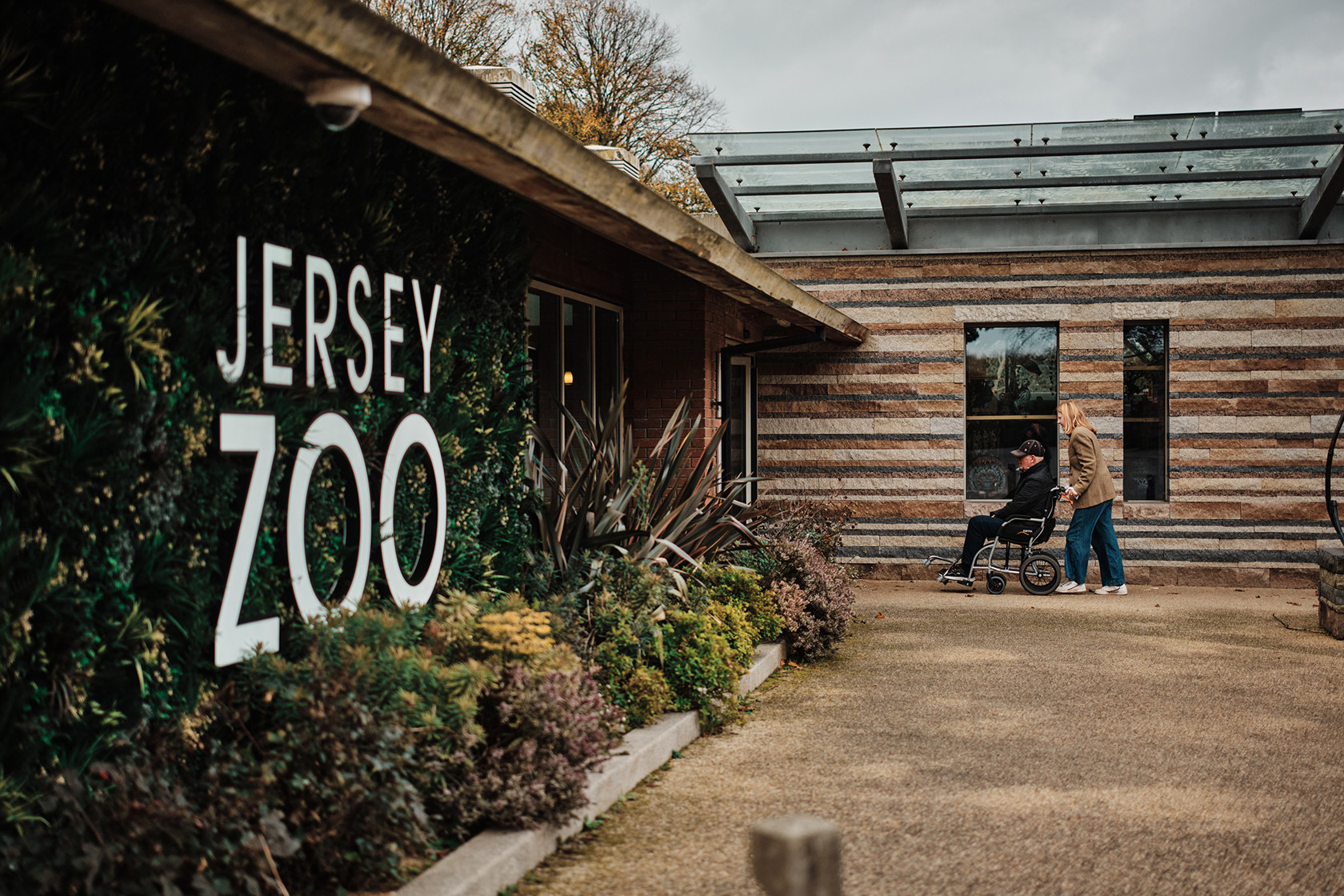
It has also been exciting to see the progress at Jersey Zoo as our new gorilla house takes shape. It’s nearly ten times the size of their existing enclosure, which is set to be the best facility of its kind in Europe with our troop of gorillas preparing to move in the Spring.

Following an outbreak of Pasturella in our population of Livingstone’s Fruit bats, we developed a world-first vaccine, which will be used by other zoos that hold fruit bats. I want to acknowledge the extraordinary efforts of our mammal and vet teams in acting so fast to safeguard these precious bats. But sadly, we also made the incredibly difficult decision to say goodbye to our bats, and we are working to find them new homes to help protect this vital population.
Our field programmes stretch from Jersey to many sites around the world. Locally, we saw the largest flock of choughs ever, which led to us winning a local conservation award, and we also received a nomination for a national award for our work with the agile frog.
In Scotland, the restoration process has started. We have completed baseline ecological and species surveys and begun restoring natural processes by repairing peatlands and reducing grazing pressure on the Dalnacardoch estate. These efforts are already showing results, peatlands rewetted to their former vibrant glory, are now teaming with insects and mosses. Native trees have started to regenerate naturally and wildlife is returning.

Showing the vital integration between our work at Jersey Zoo and at our field sites, we transported 57 lesser night gecko eggs back to the Mauritian islet of Ilot Vacocas which had been stricken by an oil spill in 2020. This was an incredible success with a hatching rate of 88%, meaning we are restoring lost genetic diversity back into the wild population.
We also transported four pink pigeons to the Gerald Durrell Endemic Wildlife Sanctuary in Mauritius, to be paired with partners caught in the wild, in the hopes of improving the wild population’s genetic health. Since then, two pink pigeon squabs have hatched.

Lake Sofia in the northern highlands of Madagascar and home to the Madagascar pochard, the rarest duck in the world, came under serious threat when heavy rains caused the lake to burst through a natural outlet and the water drained to 2% of its original surface area. Our quick action and that of our partners and the local community, to build a dam, prevented the loss of decades of conservation work.
Also in Madagascar, we translocated 300 Critically Endangered Madagascar big-headed turtles, locally known as rere, from Lake Ambondrobe to Lake Maromahia to restore the population.
In India, we celebrated 30 years of the Pygmy Hog Conservation Programme which aims to restore wild populations of the world’s smallest pig, the pygmy hog, and we have released 179 pygmy hogs back to their grassland home over the course of our Rewild or World strategy. The growing recovery of this species is an exciting indicator of a greener future for the grasslands, as well as good news for the long-term survival of the other animals living there and the valuable ecosystem services that healthy grasslands provide for local people

At Durrell we are now firmly focused on the future. As an organisation we think in decades, as we know that saving species takes time, commitment and vision. As we prepare for our next strategy, we have been asking ourselves where we will be in 100 years’ time. Gerry’s extraordinary vision still drives us today and his pioneering approach will continue to guide us in the years to come. We are excited to share with you next year, the plans for the Trust over the next ten years.
Thank you to our members, donors, zoo visitors, supporters, volunteers and conservation partners whose commitment to Durrell makes this extraordinary work possible. We are especially thankful to our staff around the world whose passion, skill, dedication, resilience, and pursuit of excellence have helped turn our vision into reality.
Together, we feel proud of all we have achieved and of the hope we are creating for the future of our planet. And we’re hopeful that with your continued support in 2026 our people will continue to save species from extinction.